
Could eating more venison support nature recovery?
Scotland’s deer population is unsustainably high, especially in the lowlands and our expanding forests. Where there are too many deer for the local environment, they can block nature recovery – so numbers must be managed. But deer management is expensive, raising the question: could these costs be met, at least partly, by growing Scotland’s wild venison market?

Scotland’s natural heritage is in trouble. Scientists report that one in nine Scottish species is now at risk of national extinction. Since 1970, nearly half of this country’s flowering plants and 57% of lichen species have disappeared from places where they once grew. But against this backdrop of loss, deer have bucked the trend. Deer aren’t declining – quite the opposite. And this has created an unusual dilemma.
Deer are much-loved, offering many of us our only remaining contact with a large wild animal. Deer also contribute to many natural processes, enriching the natural environment. But in places where there are too many deer for the environment to support, Scotland faces a problem. Too many hooves break up delicate peatlands, letting in oxygen and letting out carbon. Too many nibbling mouths restrict woodland regeneration and reduce biodiversity.
Deer are much-loved, offering many of us our only remaining contact with a large wild animal.
The freshly minted Natural Environment Bill recognises this problem and includes a dedicated Deer Management and Venison Plan. It extends NatureScot’s powers to cull deer, allowing interventions where deer are deemed to be creating a barrier to nature recovery. But while NatureScot may have new powers, their budget remains limited.
Importantly, landscape-level culling still depends on goodwill from landowners. Indeed, the Scottish Government estimates that around 80% of deer management is carried out by the private sector. This is why Jim Fairlie, the Minister for Agriculture and Connectivity, has highlighted the importance of a ‘collaborative approach’ to deer management, the need for incentives and a ‘flourishing venison market.’

Around 80% of deer management is estimated to be carried out by the private sector, often at a loss to those who manage the work.
Venison – the edible flesh of deer – is a healthy, locally-abundant, organic source of high quality protein. And because deer often use marginal areas unsuitable for conventional agriculture, wild Scottish venison is exceptionally sustainable. It might even be carbon negative, since deer management can promote peatland recovery and help native woodlands regenerate. Despite these benefits, venison remains a niche choice of meat.
‘We need greater awareness, understanding and education, which means cultural change as well as wider availability,’ says Richard Playfair, Secretary of the Scottish Venison Association. ‘Crucially, there needs to be investment to promote these benefits, so that a venison burger becomes a familiar and popular alternative to beef or lamb.’
Getting to know venison means getting to know its variety. Red deer venison is rich in flavour and coarsely textured, while roe deer venison is fine-grained and slightly sweet in taste. Sika and fallow deer have their own distinctive characters. Age, how long the meat has been hung and the season in which an animal was culled, all further influence flavour.

So, if venison were more popular and producers were better compensated for the deer they cull, could consumer demand help fund the costly business of deer management, as the Scottish Government hopes?
As a natural product with no obvious farming costs (nearly all venison in Scotland is harvested from wild animals), venison is surprisingly expensive to produce. The costs of employing and housing stalkers, maintaining vehicles and running a larder all add up. One report calculated that the annual income from private sector deer management was £15.8m while expenditure was £36.8m.
‘There are several barriers to expanding the venison market, not least the low price currently paid to producers which, if improved, would encourage an uplift in production,’ suggests Richard.

Buying venison helps fund deer management, but producers still need more incentives to help cover their costs.
On the other hand, while producers don’t earn enough from venison sales to cover their costs, consumers at the other end of the supply chain still find it expensive. A survey by SCOTLAND: The Big Picture found that existing prices and accessibility were two major barriers to the public’s appetite for venison. So raising the price of venison for consumers is clearly not the answer.
‘There shouldn’t be a price premium for buying venison versus other red meats in any form,’ acknowledges Richard. Ultimately, the venison market will probably need to be subsidised, if only to level the playing field with the rest of the farming sector. ‘The public funding we receive is tiny compared to that spent on other red meats,’ he continues. ‘Six figure sums are regularly injected into Scotch Lamb for its seasonal campaigns, but we struggle to attract a fraction of that for our annual promotional activity.’
‘There shouldn’t be a price premium for buying venison versus other red meats in any form.’
The price paid to producers isn’t the only issue hampering the market either. According to Richard, the skills base and workforce for venison production and processing needs to be expanded. ‘We also need support for local micro-processing infrastructure and to develop local markets,’ he explains. ‘Food hygiene regulation could be streamlined to allow for easier set-up of micro Approved Game Handling Establishments (AGHEs) and local processing centres. Equally, we need encouragement for major processors to help them capture national retail opportunities and overseas markets.’
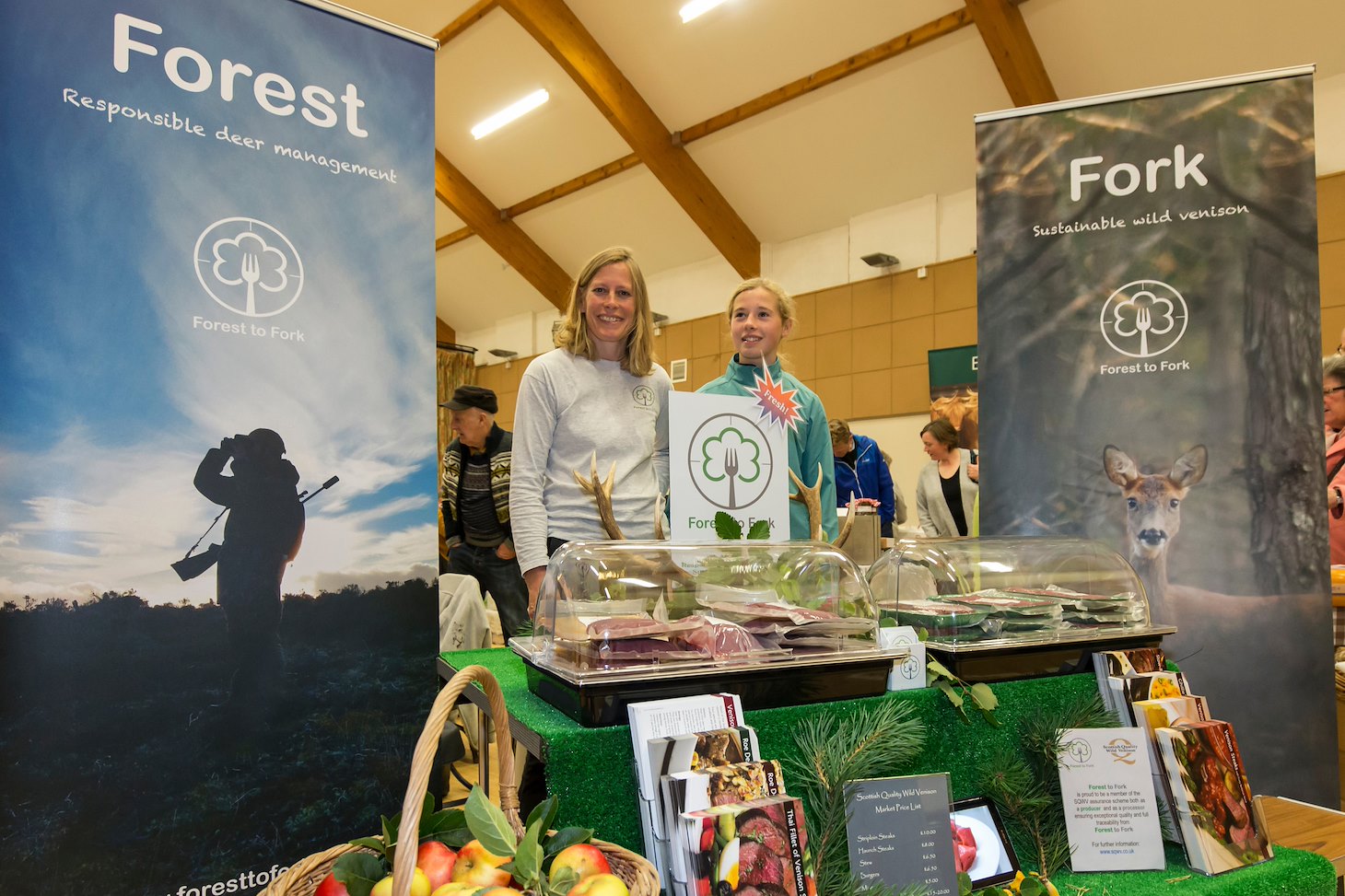
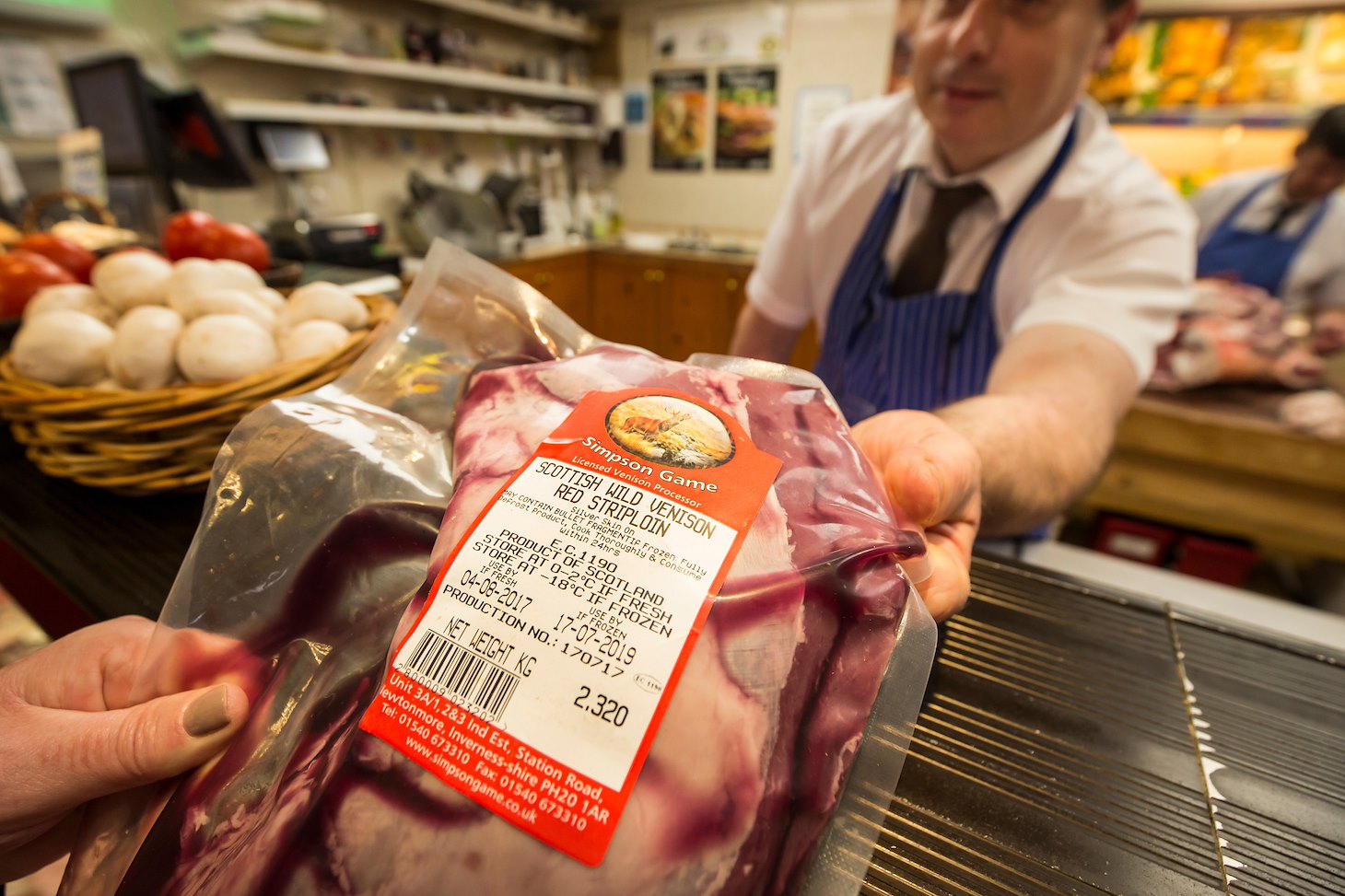
Producers may also need to adapt, to overcome another problem with the current market. ‘Scottish wild venison’s true value is constrained by a stop-start supply chain driven by seasonal culls. These create market gluts after most tourists have left and many restaurants are quiet,’ says John Forteith, from Scottish Quality Wild Venison. ‘The solution is to grow demand – that will in turn grow value up the supply chain. This would then motivate the stalking community to shoot more outside the traditional seasonal peaks.’
‘Scottish wild venison’s true value is constrained by a stop-start supply chain driven by seasonal culls.’
‘We need to either embrace seasonality and make it a selling point, or lose the idea altogether by ensuring that quality product is available all year round,’ suggests Richard Playfair. ‘The plus side is that as a sector we’re still small and even a small, positive movement of the dial would deliver a significant impact.’
If we want a more consistent, year-round venison supply, consumers need to demonstrate demand by choosing it more often. And one way or another, if we want a healthy natural environment, we need to support deer management. Venison sales may never fully fund these costs, but a stronger domestic market would certainly help. After all, when it comes to deer management and its essential role in Scottish nature restoration, there’s no such thing as a free lunch.
_______________________________________________________________________________________________________________
Want to try venison for the first time? Check out this simple but delicious, traditional family favourite.
This article is the third in a series of stories and films which will form the Fiadh project. Inspired by the Gaelic word ‘fiadh’, which refers to both ‘deer’ and ‘the wild’, the project seeks to inspire fresh conversations and shift perspectives around deer management, celebrating the sector’s growing emphasis on the recovery of more diverse, more resilient landscapes.